Science zone
Hands-on physics, chemistry, and biology where students observe, measure, and conclude.
Hands-on, NEP 2020 aligned innovation spaces for schools — from Class 1 to Class 12.
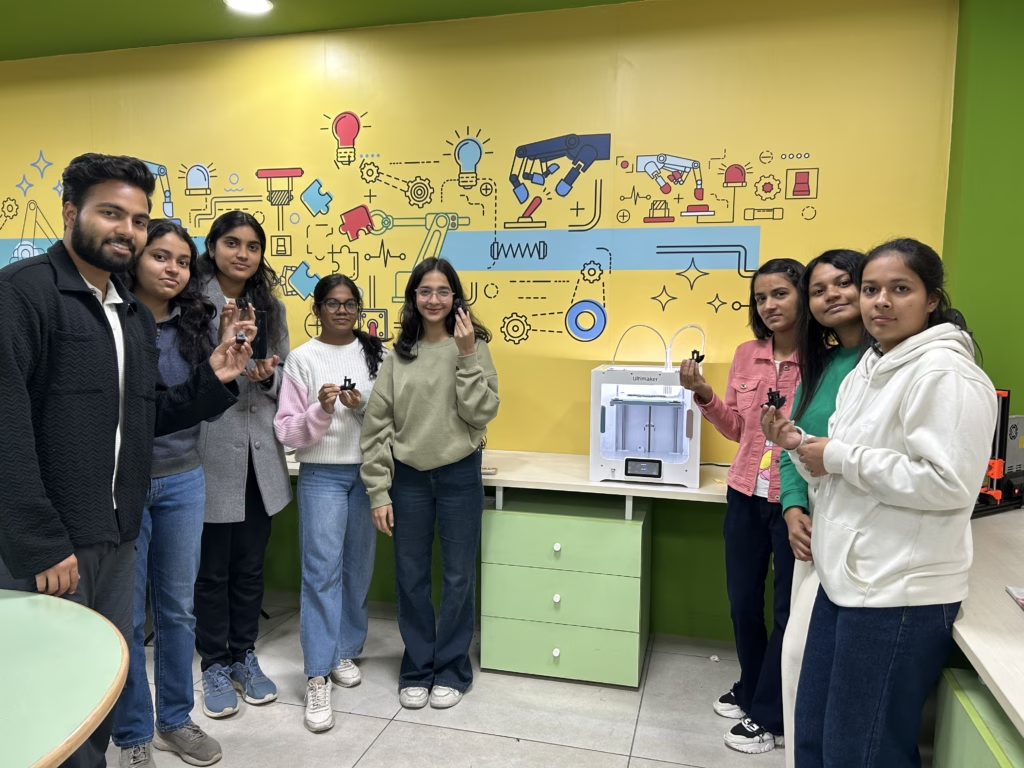
Most STEM labs are bought, not designed. A school orders a kit catalogue, boxes arrive, and teachers are left to figure it out. Students complete a few activities, excitement fades, and the lab becomes a storage room with better lighting.
Karkhana designs STEM labs backwards: we begin with learning outcomes, then define the equipment, curriculum, and teacher support required to reach them. That's why our labs stay active.
Hands-on physics, chemistry, and biology where students observe, measure, and conclude.
Scratch, Python, block coding, and microcontroller programming that progresses with age.
3D printing, basic electronics, structures, and mechanisms used to design real solutions.
Manipulatives and visual models that make geometry, algebra, and data tangible.
Line followers, obstacle avoiders, and approachable AI image-classification projects.
Empathy mapping, problem framing, and rapid prototyping — the mindset layer that makes everything else stick.
Play-based STEM with blocks, simple machines, nature observation, and measurement. Curiosity over content.
Electronics, coding, 3D design, and model-making. Students move from consumer to creator.
Project-based learning tied to subject syllabi, with IoT, robotics, and evaluated design challenges.
Research projects, innovation challenges, and prototype development for engineering and design pathways.
NEP 2020 calls for experiential, multidisciplinary, and competency-based learning. Our STEM labs address those outcomes across grade bands, with teacher guides, rubrics, and assessment tools built into the programme.
Share your grade range, available space, and rough budget. We'll send a tailored proposal within five working days.